
Quick answer
MCP (Model Context Protocol) is an open standard, introduced by Anthropic in November 2024 and since adopted by OpenAI and Google, that lets AI assistants connect to external tools and data and query them live instead of relying on training data. For marketers, it means AI agents can pull real-time brand data, and platforms like Rank Prompt let you run visibility checks from inside  Claude or ChatGPT.
Most marketing coverage of AI has focused on what assistants say about your brand. MCP is about something different and, over the next few years, arguably more consequential: what live data assistants can pull from your brand, and from the tools you already use. It is a plumbing change, not a headline feature, which is exactly why it is worth understanding before your competitors do.
What MCP Actually Is
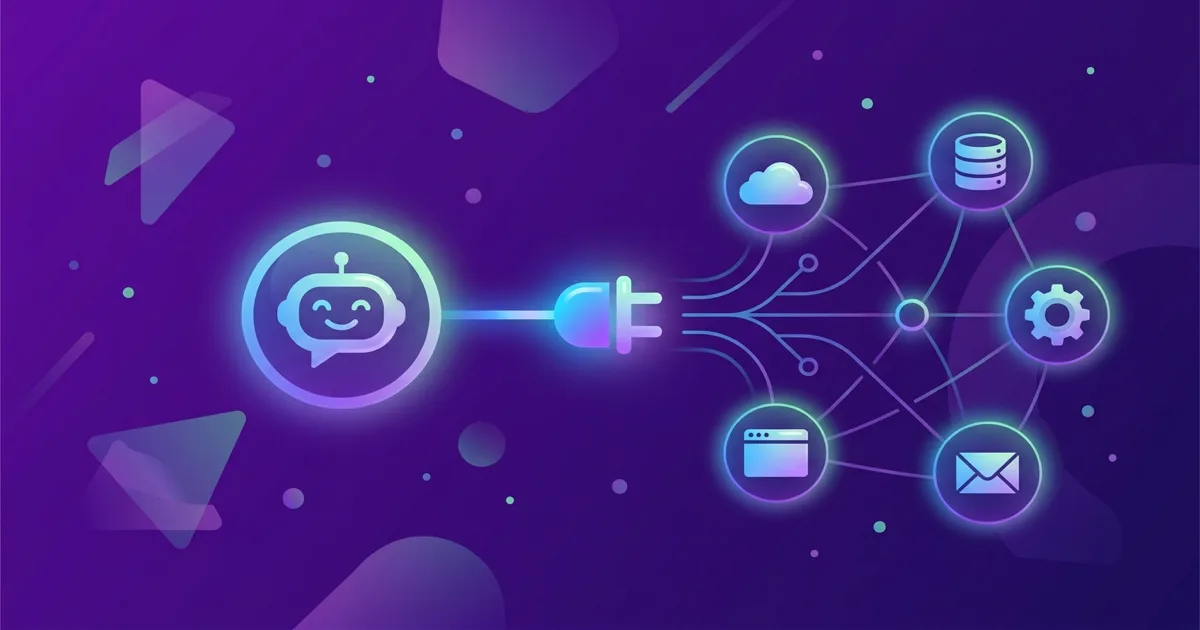
Model Context Protocol is an open standard for connecting AI applications to external systems. Anthropic introduced it in November 2024 as an open, two-way standard for linking AI assistants to data sources and tools. The official MCP documentation uses a useful analogy: MCP is like a USB-C port for AI applications, a standardized way to plug an assistant into external data, tools, and workflows.
The key word is live. Without MCP, an AI assistant answers from its training data, which is a frozen snapshot with a cutoff date. With MCP, an assistant can connect to an MCP server and query a real system in real time: a database, a file store, a search index, or a SaaS tool’s API. The assistant asks, the server answers with current data, and the model uses that in its response.
MCP is not an Anthropic-only feature. It is an open protocol with broad ecosystem support. OpenAI supports MCP in its Agents SDK and in ChatGPT, and Google supports it in its Agent Development Kit. Development tools like VS Code and Cursor connect to MCP servers too. When three of the largest AI labs converge on the same connector standard, that standard is where the ecosystem is heading.
MCP vs. a Regular API
Marketers often ask how MCP is different from an API, since APIs already let software talk to software. The distinction matters for planning.
| Traditional API | MCP server | |
|---|---|---|
| Interface | Custom per service | Shared standard |
| Consumer | Developers writing integration code | AI assistants, directly |
| Discovery | Read the docs, build a client | Assistant discovers available tools |
| Real-time data | Yes, if you build the integration | Yes, natively for any MCP client |
| Marketing relevance | Indirect (powers your stack) | Direct (assistants query your data) |
An API is a door each company builds on its own terms. MCP is a standard door that any MCP-speaking assistant already knows how to open. That is why MCP sits above individual APIs: it makes them consumable by AI agents without a bespoke integration for each one.
Why This Matters for Brand Visibility
Here is the marketing implication in plain terms. Today, when someone asks ChatGPT about your product, the assistant answers from training data plus whatever it can find on the live web. Tomorrow, when AI agents are doing more of the buying research, the brands that expose accurate, structured data through an MCP server become directly queryable.
Consider what that changes:
- Currency. An assistant querying your MCP server sees today’s pricing and today’s inventory, not a stale training snapshot or a cached page.
- Directness. Instead of inferring your product details from scattered web content, an agent reads them from a source you control.
- Citability. Data that comes from an authoritative, brand-controlled source is more likely to be treated as reliable in an agent-driven answer.
None of this replaces the AEO fundamentals. You still need to be crawlable, quotable, and cited across ChatGPT, Gemini, and Perplexity, because most consumer queries still hit assistants without a direct MCP connection to your brand. MCP is an additional surface, not a substitute for the visibility work you are already doing. But it is a surface where early movers can shape how agents understand their brand.
A realistic note on timing: this is early. Consumer AI assistants are not yet routinely querying arbitrary brand MCP servers during a normal chat, and the agent-commerce world is still forming. Do not let anyone sell you a panic timeline. The right posture is to learn the pattern now, get your data house in order, and be ready as adoption grows.
Where MCP Already Helps Marketers Today
The most immediate, practical use of MCP for marketers is not exposing your own server yet. It is consuming MCP servers from the tools you already use, so you can work inside the AI assistant instead of switching between dashboards.
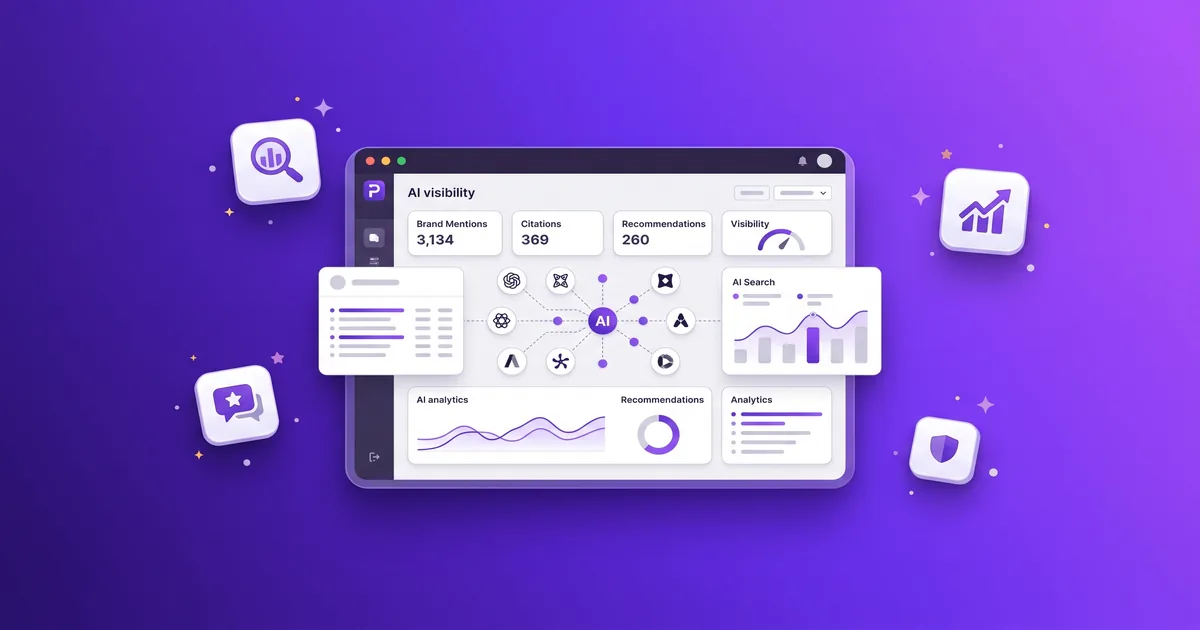
Rank Prompt ships an MCP server for exactly this. With Rank Prompt’s MCP server connected to Claude or ChatGPT, you can run AI visibility checks, pull brand mention and citation data, and trigger audits without leaving the chat. You ask the assistant to check how your brand is showing up across AI answers, and it queries Rank Prompt live and reports back. The setup and available tools are documented in the developer docs and the MCP reference. This is analytics work moving into the assistant, which is where a growing share of marketing research already happens.
That pattern will spread. As more analytics, SEO, and commerce platforms ship MCP servers, the marketer’s workflow shifts from “open ten tabs” to “ask the assistant, which queries the tools.” The teams that get comfortable with that now will move faster when it becomes the default.
What Marketers Should Do Now
You do not need to become an engineer. You do need a plan. Four concrete steps:
- Audit which of your tools already have MCP servers. Analytics, SEO, CRM, and commerce platforms are shipping them steadily. Knowing which of your stack you can drive from inside an assistant is the fastest win available today.
- Try one. Connect Rank Prompt’s MCP server to Claude or ChatGPT and run a visibility check from the chat. It is the cleanest way to understand the workflow and where it saves time. Pair it with an AI mention tracker so the data you pull is real and current.
- Get your brand data accurate and structured. If you later expose an MCP server, or if agents read your structured data another way, garbage in means garbage out. Clean pricing, inventory, and documentation are the foundation.
- Watch commerce protocols, but do not overcommit. Agentic checkout and agent-commerce standards are emerging. Track them, run small experiments if you sell online, and avoid betting a budget on a standard that has not settled.
The through-line: MCP rewards brands that treat their own data as a product AI agents will consume, not just content humans will read.
The Bottom Line
MCP is the connector layer that lets AI assistants query live systems instead of guessing from training data. It is open, backed by Anthropic, OpenAI, and Google, and already useful today for marketers who want to run visibility work from inside Claude or ChatGPT with tools like Rank Prompt’s MCP server. The strategic move is not to panic about timelines, it is to treat your brand data as something AI agents will consume, get it clean and structured, and learn the workflow now while it is still early.
 ChatGPT
  AI Mode
  Grok
Grok  Perplexity