



AI search is changing how visibility works. In many results, readers see an AI summary first sometimes without ever clicking through. If your brand isn’t mentioned or cited, you can lose mindshare even when you rank.
We didn’t build this list by skimming feature pages. We reviewed the most-used link building platforms and shortlisted tools based on what actually moves outcomes: discovering relevant opportunities, running real outreach and measuring results across organic SEO and AI citations.
This guide covers 10 link building tools for research, outreach and measurement plus what to look for if your goal includes brand mentions and citations in AI answers, not only backlinks.
Why Link Building is Important for AI and Organic SEO
Links are still one of the clearest third-party signals that a page is worth referencing. A relevant editorial link can improve discovery, support topical authority and help important pages compete in crowded search results.
AI-driven search adds another layer. Many AI answers include citations or draw from sources that have earned trust across the web. When credible sites mention your brand and reference your pages, you increase the odds that your content is treated as a source in summaries, comparisons and recommendation-style queries.
How We Ranked These Tools
We evaluated each tool using the same core criteria to keep the list consistent and practical. We looked at how well each platform supports real link-building workflows, prospecting, outreach execution and reporting and whether it helps teams understand visibility in AI-driven search (mentions and citations), not just Google rankings.
To avoid keyword-stuffed comparisons, we focused on semantic coverage: tools that help with link prospecting, link outreach, backlink analysis, brand mention tracking, citation monitoring and reporting made the cut. Tools that are popular but weak on execution or measurement were not prioritized.
How We Chose These Link Building Tools
- Relevance over DR/DA: we prioritized niche fit and editorial alignment, not vanity metrics.
- Fresh data: backlink indexes and contact details had to be current enough to use in outreach.
- Outreach quality: personalization, follow-ups and workflow support mattered more than automation hype.
- Proof in reporting: tools had to track wins (new links/mentions) and losses (lost links/coverage).
- AI visibility signals: priority given to tracking brand mentions and citations in AI answers.
- Best-fit clarity: each pick needed a clear use-case (solo, in-house, agency, PR-led etc.).
Rapid Rundown of the 10 Best Link Building Tools
Select tools that drive relevance, link outreach quality and measurement. Our one-line blurbs below allow you to quickly shortlist without taking shots in the dark.
- RankPrompt: Ideal for monitoring AI search brand mentions, then converting citation gaps into action items.
- Link-able: Ideal for achieving links quickly with an AI-assisted outreach program and publisher network.
- Semrush: Best for competitor backlink research and broad SEO workflows in one platform.
- Ahrefs: Best for deep backlink analysis, link intersect research and opportunity discovery.
- Moz Pro: Best for simple authority tracking, link monitoring and safer reporting for teams.
- Pitchbox: Best for agency-scale outreach pipelines with templates, automation and approvals.
- BuzzStream: Best for relationship-based outreach using a link-building-focused CRM.
- Response: Best for campaign-based outreach with built-in prospecting and contact discovery.
- BuzzSumo: Best for finding link-worthy topics and spotting who is mentioning competitors.
- Postaga: Best for launching personalized outreach sequences fast with guided AI workflows.
Comparison of Top 10 Link Building Tools
| Tool | Primary use | AI visibility focus | Outreach built in | Best for |
| RankPrompt | AI mentions tracking | High | Yes | Citation and brand mention growth |
| Link-able | Link placements | Medium | Yes | Faster execution and placements |
| Semrush | Backlink research | Medium | Limited | All in one SEO plus links |
| Ahrefs | Backlink analysis | Medium | No | Deep competitive link intel |
| Moz Pro | Authority monitoring | Low to Medium | No | Simple reporting and tracking |
| Pitchbox | Outreach at scale | Medium | Yes | Agencies and large teams |
| BuzzStream | Outreach CRM | Medium | Yes | Relationship based outreach |
| Respona | Prospect to pitch | Medium to High | Yes | Campaign automation with prospecting |
| BuzzSumo | Content and mentions | Medium | No | Digital PR and linkable assets |
| Postaga | Outreach sequences | Medium | Yes | Quick personalized outreach |
1. RankPrompt
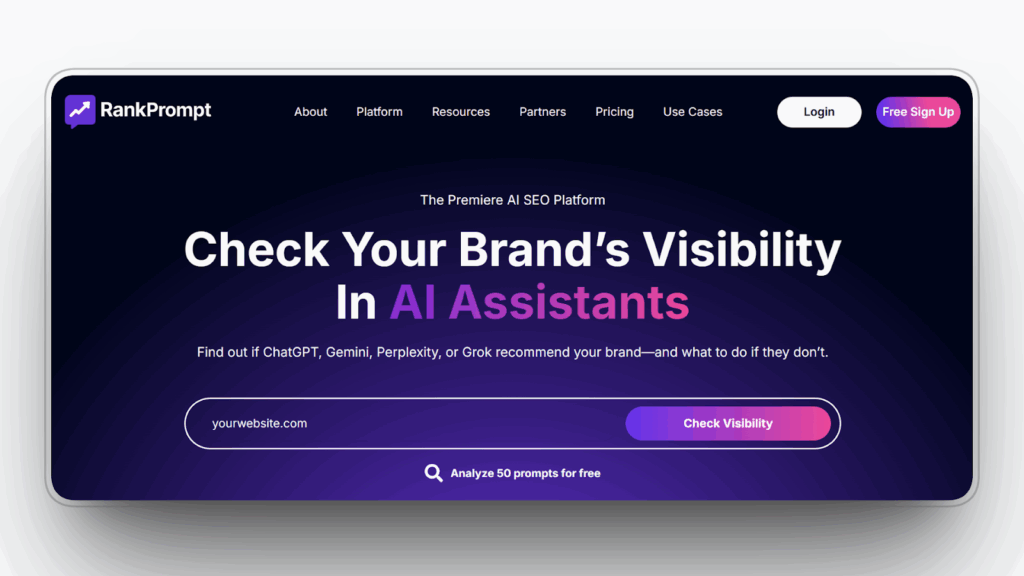
RankPrompt focuses on how brands show up inside answer engines, not only in classic search results. If buyers ask an assistant for “best X tools” or “alternatives to Y,” this type of tracking helps you see whether your brand is mentioned and how it is positioned.
Use it as a gap-finder. When competitors show up in citations and you do not, you can trace which sources are being referenced and decide what to fix first: content coverage, positioning clarity or third-party validation.
Key link building features
- Tracks brand mentions across AI platforms for visibility monitoring
- Benchmarks AI visibility against competitors over time
- Highlights citation signals and reference patterns tied to AI answers
- Provides action oriented recommendations connected to citations and structured data
How it supports AI and organic SEO
It helps you identify where third party validation is missing, so you can aim digital PR and link earning toward the exact sources and topics that influence both rankings and AI citations.
Best for
- Brands that care about being cited and recommended in AI answers
- SEO teams coordinating content, PR, and authority building
- Marketers who need clear competitive visibility, not guesswork
Pricing
- Starter: $49 per month and 150 credits per month
- Pro: $89 per month and 500 credits per month
- Agency: $149 per month and 1000 credits per month
2. Link-able
Link-able is built for faster prospect discovery when you are trying to turn a broad idea into a list of realistic sites. It is most useful when you need a starting set of targets without building a custom process from scratch.
Treat it as a discovery layer, not an autopilot. You still need to qualify each site for relevance and editorial standards, then write outreach that matches the publisher and page context.
Key link building features
- AI Link Finder searches to surface link insert and niche edit opportunities
- AI anchor generation to speed up outreach and placement planning
- My Sites List to save and manage opportunities at scale
- Export option for link opportunities on the paid plan
How it supports AI and organic SEO
It helps you expand third party validation by making it easier to identify relevant sites and convert those into placements, which supports authority signals that influence rankings and can also improve credibility for AI sourced summaries.
Best for
- Teams that want faster prospecting with a guided workflow
- Brands that prefer AI assisted discovery over manual list building
- Marketers who need repeatable link ops for one website
Pricing
- Free Plan: $0 per month, includes 1 website, 10 AI Link Finder searches, 10 AI anchor generations, 30 sites in My Sites List
- Paid Plan: $39 per month, includes 1 website, 50 AI Link Finder searches, 50 AI anchor generations, 500 sites in My Sites List, plus export link opportunities
3. Semrush
Semrush is a broad SEO platform that many teams use for competitor research, keyword work, and backlink analysis in one place. It fits best when you want link building to sit inside a larger workflow, not as a separate tool.
If your reporting includes AI visibility, confirm which plan features you are using and what is included. Semrush has positioned its newer bundles around SEO plus AI visibility tracking, so do not assume older plan names match what you buy today.
Key link building features
- Built-in Link Building Tool for discovering and prioritizing backlink opportunities
- Prospect outreach and email tracking from within the platform
- Lost and broken link monitoring with recovery workflows
- Backlink profile analytics tied to competitor insights
How it supports AI and organic SEO
Semrush helps you spot authority gaps and competitor link patterns so your strategy reinforces topical credibility and relevance. Two signals that support higher rankings and the likelihood of your site being referenced in AI generated summaries. Tools like keyword research, rank tracking and backlink analytics all feed into a more complete picture of domain strength.
Best for
- SEO teams that want links connected to broader organic insights
- Marketers needing reporting across keywords, content, and links
- Brands competing in crowded, high-volume SERPs
Pricing
Semrush offers tiered plans based on scale and needs:
- Pro: starts around $199/mo
- Guru: around $299/mo
- Business: around $549/mo
4. Ahrefs
Ahrefs is a strong choice for backlink research when you want to find proven link patterns, not guess. It is especially useful for link intersect analysis, broken link opportunities and identifying which pages attract links in your space.
It does not run outreach for you, so pair it with a process or an outreach tool. For teams tracking visibility beyond Google, note that Ahrefs includes a Brand Radar product but pricing and currency display can vary by region.
Key link building features
- Link Intersect to find domains linking to competitors but not you
- Competitive filters to refine link opportunity lists
- Backlink profile analysis for domains and pages
- Opportunity discovery workflows backed by large link index data
How it supports AI and organic SEO
By showing where credible sites already link, Ahrefs helps you focus link earning on verified authority paths. Pairing that with Brand Radar lets you monitor how these earned signals affect visibility not just on search engine rankings but in AI and answer engines.
Best for
- SEOs who prioritize deep research over automated outreach
- Teams planning linkable assets backed by competitor evidence
- Competitive niches where targeting accuracy drives results
Pricing
- Lite – $129/mo (basic research and backlink data)
- Standard – $249/mo (expanded data and insights)
- Advanced – $449/mo (larger data and export limits)
- Enterprise – $1,499/mo (enterprise scale with maximum limits)
5. Moz Pro

Moz Pro is a practical option for teams that want link monitoring and reporting without a steep learning curve. It is often used to track authority trends, review anchor text patterns and spot risk signals before they become a bigger problem.
It works best as a measurement and hygiene layer. If outreach is a major part of your workflow, you may still want a dedicated outreach tool for sending and follow-ups.
Key link building features
- Link Explorer for backlink audits, anchors and competitor comparisons
- Domain Authority and related authority signals for fast qualification
- Spam Score style risk signals to avoid low quality targets
- New and lost link monitoring to protect wins and recover drops
How it supports AI and organic SEO
Moz Pro helps you keep your link profile trustworthy and explainable, which supports long term ranking stability and makes it easier to build the kind of credible backlink footprint that AI systems prefer to reference.
Best for
- Small to mid size teams that want simple, consistent link reporting
- SEO leads who need authority metrics stakeholders understand
- Brands focused on link hygiene, risk reduction and steady growth
Pricing
Commonly listed plan pricing includes
- Standard $99/mo
- Medium $179/mo
- Large $299/mo
- Premium $599/mo
6. Pitchbox
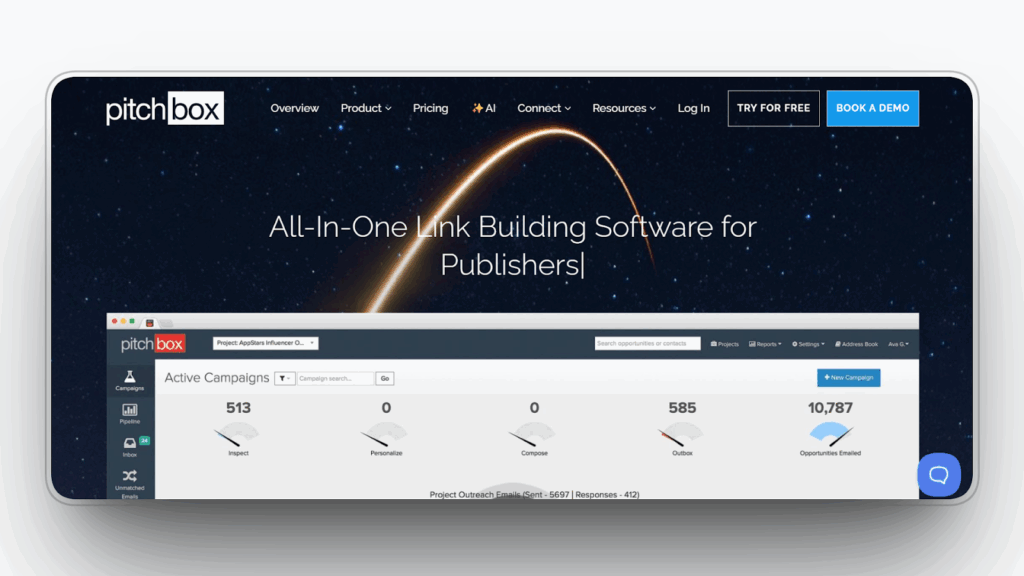
Pitchbox is built for outreach at scale when you need repeatable campaigns, approvals, and a shared pipeline. Agencies and in-house teams use it when multiple people touch the same prospects and you need clean reporting.
It shines when volume and process matter, but it still requires good targeting and personalization. The platform can help you execute, but it cannot fix weak prospect lists or generic pitches.
Key link building features
- Prospecting and campaign organization for outreach workflows
- Personalization and follow up sending at scale
- Team controls and workflow organization through projects
- Import options for migrating contacts and lists
How it supports AI and organic SEO
It helps you execute consistent relationship driven outreach, which supports earning mentions and links from credible sites that strengthen authority signals over time.
Best for
- Agencies running multi client campaigns
- In house teams with high outreach volume
- Teams needing approvals and repeatable processes
Pricing
Pitchbox lists plans:
- Pro: $165/mo
- Advanced: $420/mo
- Scale: $675/mo
7. BuzzStream
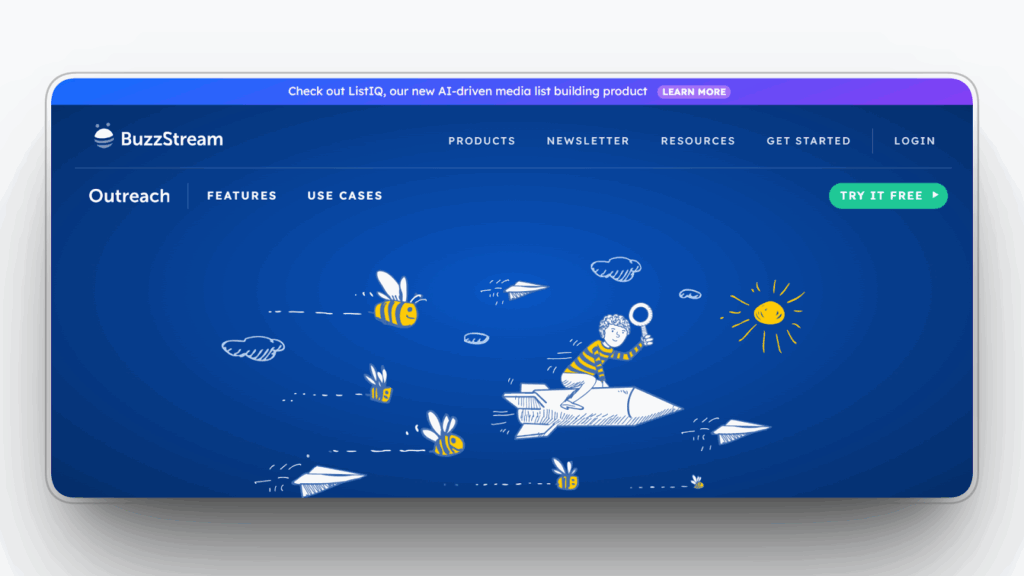
BuzzStream is an outreach CRM that helps you manage relationships over time, not only send one campaign. It is useful when you want to track conversations, keep notes on editors, and avoid sending the same pitch twice.
If your link building leans toward digital PR and repeat partnerships, a CRM-style tool like this can be easier to maintain than spreadsheets.
Key link building features
- Contact info discovery plus open, click, and reply tracking
- Email templates, scheduling, reminders, and automated follow ups
- Team template sharing, permissions, and project performance reporting
- Link reporting plus link monitoring at higher tiers
How it supports AI and organic SEO
BuzzStream improves the consistency and quality of your outreach execution, which increases your odds of earning editorial links and brand mentions from credible sites. That third party validation supports organic rankings and builds the kind of web wide trust that AI systems tend to rely on when choosing sources.
Best for
- Digital PR teams managing long term publisher relationships
- Agencies running multi client outreach with shared processes
- SEO teams that want full visibility into outreach history and results
Pricing
- Starter: $24/mo
- Plus: $99/mo
- Growth: $199/mo
- Pro: $399/mo
8. Respona
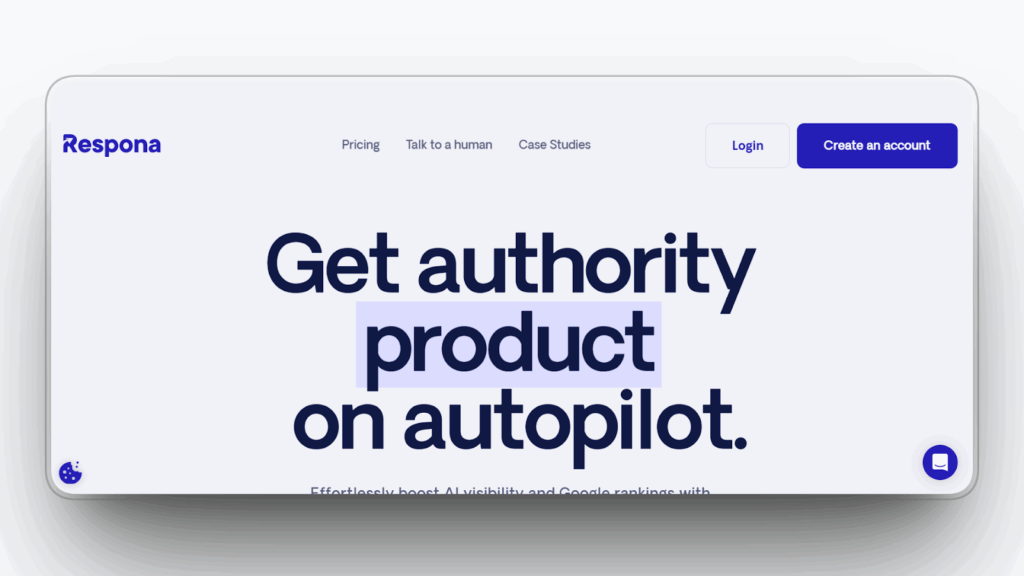
Respona positions itself around delivered placements and campaigns, which can be appealing if your team cannot spend weeks building lists and sending follow-ups. It is closer to a managed execution model than a pure research tool.
Before you commit, get clear on what counts as a delivered result, what sites are included, and how topic relevance is handled. Placement quality matters more than volume.
Key link building features
- Pay-per-result model based on delivered placements
- Placements include content creation, outreach, and publishing
- Control over anchors, URLs, and custom placement requirements
- Volume discounts tied to monthly spend levels
How it supports AI and organic SEO
By increasing credible third-party mentions, it strengthens the kind of external validation that supports organic authority and can influence which brands get referenced in AI-generated answers.
Best for
- B2B brands targeting authority mentions, not mass outreach
- Teams that prefer outcomes over managing outreach operations
- Marketers who need placement-based reporting for stakeholders
Pricing
- Starter: $100/mo
- Standard: $160/mo
- Authority: $240/mo
- Power: $400/mo
- Elite: $500/mo
9. BuzzSumo
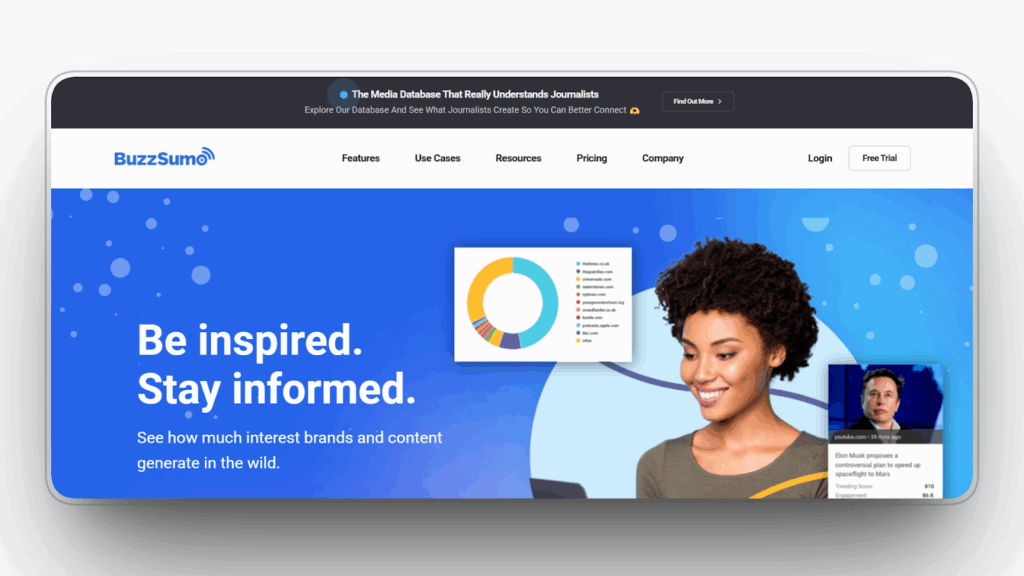
BuzzSumo helps you find what topics get picked up, who shares them, and where coverage happens. That is useful when your link strategy starts with content angles, not cold outreach.
It is also a solid monitoring tool. If a competitor is getting cited often on specific topics, you can use that signal to plan assets and outreach that match what publishers already cover.
Key link building features
- Content discovery and performance insights for linkable ideas
- Monitoring and alerts for brand, competitor, and journalist signals
- Mention tracking for fast outreach timing
- Backlink alert types and monitoring workflows
How it supports AI and organic SEO
It helps you build and promote content that earns citations naturally, and it supports fast reaction outreach when your brand is mentioned, which can turn coverage into durable authority.
Best for
- Content teams building linkable assets
- Digital PR teams monitoring narratives and mentions
- Marketers who want topic and influencer insight first
Pricing
- Content Creation: $199/mo
- PR & Comms: $299/mo
- Suite: $499/mo
- Enterprise: $999/mo
10. Postaga
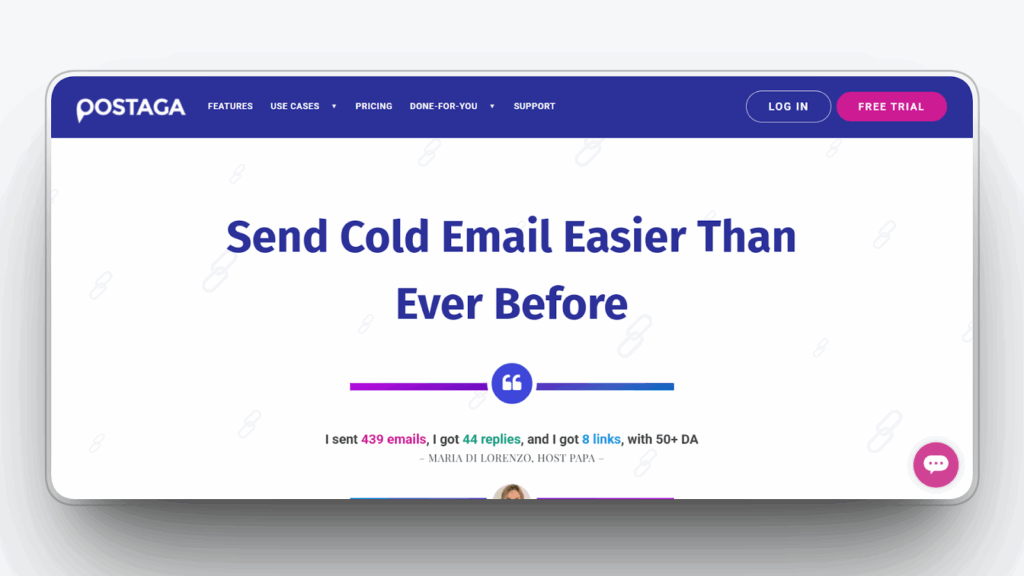
Postaga is a guided outreach platform that helps small teams run common link building plays without building a complex stack. It is useful when you want a repeatable campaign setup and basic automation.
It is still important to write outreach that sounds specific to the target. Use the structure to stay organized, then spend time on relevance and the first two lines of the email.
Key link building features
- Opportunity searches that surface relevant sites and contacts for outreach
- Campaign generator and instant campaigns for faster campaign setup
- Website intelligence and content intelligence to support targeting decisions
- SMTP integrations so you can send from your own email setup
How it supports AI and organic SEO
Postaga helps you execute consistent, personalized outreach that earns editorial links and brand mentions. Those third party signals strengthen organic authority and increase the likelihood your pages are treated as credible references when AI systems choose sources.
Best for
- Solo SEOs and small teams doing outreach in house
- Content marketers promoting linkable pages and resources
- Teams that want a structured outreach process without a full agency platform
Pricing
- Pro: $99/mo
- Agency: $299/mo
How to Pick the Right Tool for your Goals
- Define the outcome you want most, rankings growth, link volume, PR coverage or AI visibility.
- Choose RankPrompt when your priority is tracking brand mentions and citations in AI search.
- Choose an outreach platform when your priority is sending pitches, follow ups and sequences at scale.
- Choose a research suite when your priority is finding backlink gaps, competitors and link opportunities.
- Choose a PR discovery tool when your priority is finding journalists, topics and share worthy assets.
- Choose the tool that fits your workflow and proves impact with clear weekly reporting.
Track brand mentions in AI search with RankPrompt
RankPrompt helps you see whether AI assistants mention your brand and how you appear when they do. Instead of relying on occasional manual prompts, you can track visibility across assistants like ChatGPT, Gemini, Claude and Perplexity, then compare performance against competitors over time.
How to track mentions step by step
- Create a Project for your brand so tracking stays consistent and historical results stay organized.
- Build a prompt set that matches buyer intent such as “best tools for X,” “alternatives to Y,” and “top agencies for Z,” because AI answers change by query wording.
- Run scans and review mention presence to see if you are listed, where you appear, and how you are described in the response.
- Check citations and sources to learn which sites and pages are being used as references, then note where competitors are cited instead of you.
- Turn gaps into actions by improving pages that should be referenced, adding supporting schema where relevant and prioritizing digital PR or link earning toward sources that are already influencing AI answers.
What to measure weekly
- Mention rate across your most important prompts
- Citation coverage for your domain and key pages
- Competitor share of voice for the same queries
- Positioning accuracy such as category fit and feature claims
Used this way, RankPrompt becomes the feedback loop that tells you where link building and PR will matter most for both organic rankings and AI visibility, without guessing or promising guaranteed outcomes.
FAQs
1. What counts as a brand mentioned in AI search?
A brand mention is any time an AI assistant names your company, product or website in an answer. It can be a recommendation, a comparison listing or a citation, even if there is no clickable link.
2. Why do AI assistants mention competitors but not my brand?
Most of the time it comes down to weak third party validation, unclear positioning or missing coverage on the topics those prompts trigger. If competitors are cited by trusted sites more often, AI systems are more likely to surface them.
3. How many prompts should I track to get useful data?
Start with 20 to 30 prompts that reflect buyer intent, comparisons and category queries. A smaller set tracked consistently beats hundreds of prompts tracked once.
4. How often should I review AI mention tracking?
Weekly is ideal for trends and faster feedback. You can do a deeper monthly review to adjust your content, PR targets and link earning priorities.
5. Do unlinked mentions matter for AI visibility?
Yes, they can. AI systems often learn brand credibility from repeated mentions across trusted sources, even when the mention is not linked, so it is worth tracking and converting high value mentions when possible.
6. Which pages should I build links to first?
Start with pages that match buyer intent and can earn citations, such as category pages, comparison pages, original research and core product pages. Prioritize pages that already rank or convert well so new links amplify results.
7. What outreach metrics matter more than send volume?
Focus on reply rate, positive reply rate, placement rate and link quality. Also track which target pages get placements and whether you earn mentions on sites that your audience trusts.
8. How do I turn an unlinked mention into a link without sounding pushy?
Thank the publisher for the mention, then suggest one relevant page as a reference that helps readers. Keep the request short and explain the benefit to their audience.