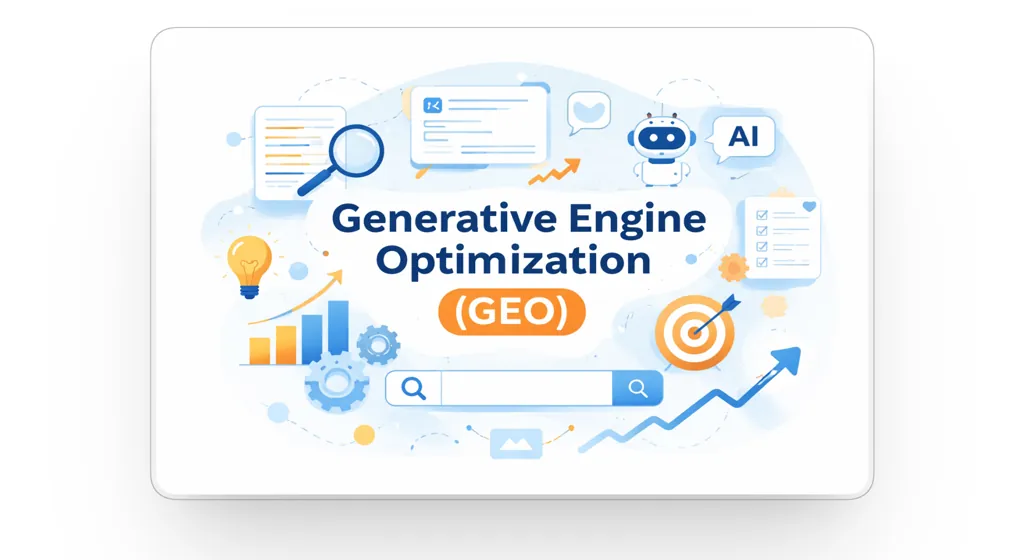




Generative AI visibility is how often tools like Google AI Overviews and AI chatbots mention your brand when they answer a question. This matters now because generative AI is already a normal habit for many people. A nationally representative survey summarized by the Federal Reserve Bank of St. Louis found that 54.6% of U.S. adults ages 18–64 used generative AI and adoption rose 10 percentage points over the past 12 months.
For brands, the worry is simple. You can publish strong content and still get skipped while AI gives the answer. You can also get summarized in a way that misses key details, repeats old info or names a competitor instead, especially when your brand message is unclear or inconsistent across the web.
In this guide, we will explain how generative AI chooses which brands to mention, what to fix on your site first, how to write content AI can reuse and how to earn trustworthy mentions over time. The goal is clarity and better odds, not promises.
Quick Start (Do This in 7 Days)
- Add a Brand Facts block to your homepage + About page (template below).
- Add a Best for / Not for section to your main service page.
- Turn one winning blog into an answer-first structure (template below).
- Run 25–50 prompts in RankPrompt and track mention rate + citation rate.
- Update the page that should win each prompt, then re-test monthly.
The 4 Terms That Decide Whether AI Mentions Your Brand
Before we get into the tactics, let’s lock in the language. These four terms show up in every AI visibility conversation, and they explain why some brands get named while others get skipped.
AI visibility
AI visibility is how often your brand appears inside AI answers, including Google AI Overviews and chatbot responses. It tells you whether AI systems recognize your brand for the topics you want to be known for.
Brand mention
A brand mention is when the AI includes your brand name in its response. Mentions shape perception because they influence which options people consider first.
Citation
A citation is when the AI links to a website or source to support what it said. Citations matter because they act like proof and they can drive clicks, not just impressions.
AEO and GEO
AEO and GEO mean optimizing content for AI answers, not only traditional rankings. The goal is to help AI understand what you do, trust your information, and choose your brand when people ask questions.
How Generative AI Chooses Which Brands to Mention
AI systems try to answer fast using sources they can retrieve, understand, and summarize with low risk. Brands get mentioned when their content is easy to match to the question and easy to justify.
- It Understands the Intent
It decides if the user wants to learn, compare, or buy. If the prompt is “best X for Y,” pages with clear criteria and a direct recommendation fit best. - It Retrieves Sources
Many systems pull documents first, then write from what they found. Your pages must be crawlable, indexable, and easy to parse, with key facts in text and clear headings. - It Chooses Brands That Are Easy to Explain
AI favors brands with one-sentence positioning, consistent details across pages, third-party validation, and proof like numbers, examples, or steps. - It Reuses Safe, Structured Blocks
AI pulls content it can quote cleanly, like short definitions, bullets, tables, and FAQs. The clearer and more specific your blocks are, the more likely you are to be named or cited.
The 5-Step AI Visibility Flywheel (Repeat Monthly)
AI answers change based on prompt wording, freshness and sources. The fastest way to improve visibility is a repeatable loop:
- Clarify your positioning (one sentence + Brand Facts)
- Structure content into quote-ready blocks (answers, steps, FAQs)
- Validate with proof + schema + consistent facts
- Earn trusted mentions and reviews (third-party signals)
- Measure mention rate + citations, then update what’s missing
Run this flywheel monthly using the same prompt set so you can see real lift.
How to Improve Generative AI Visibility for Your Brand Over Time
This is the core system for improving AI visibility. It’s intentionally simple. Start with clarity, then structure, then trust, then technical access, then measurement. Do it in order, then repeat the cycle monthly so your visibility improves as your content and signals get stronger.
1. Make Your Brand Easy to Understand
Start with the pages that define who you are. If AI cannot summarize your basics in one clean sentence, it is less likely to name you correctly, or name you at all.
What to Fix First on Your Website
- Homepage. Add one clear line that explains what you do, who it is for and the main outcome. Example: “[Brand] helps [who] achieve [result] by [how].”
- About page. Explain who you help, what you deliver, and add proof such as results, customers, credentials or recognizable categories you serve.
- Service pages. Describe each service in plain words, include examples and clarify what success looks like after using you. Add a short “best for” line so your audience fit is explicit.
- FAQ page. Answer real buyer questions directly, including cost, timelines, comparisons and “who it’s best for.” Write answers in full sentences so they can be quoted cleanly.
Add a Small Brand Facts Block
Keep it short and place it on your homepage, About page, or key service pages. Include your brand name, what you do, who it is for, where you serve, and what makes you different. Keep wording consistent across pages, profiles, and listings so AI sees one set of facts instead of mixed descriptions.
Example Brand Facts block: Brand, category, primary use case, locations served, differentiator and one proof point.
Make Your Brand an “Entity” AI Can Recognize
AI systems are more confident mentioning brands when your identity is consistent across the web. If your name, category and description change from page to page (or across directories), AI may skip you or describe you inaccurately.
Do this:
- Use one canonical brand description everywhere (site, socials, profiles).
- Add a press/media kit page so writers reference you consistently.
- Make sure your homepage and About page clearly state: category, who it’s for, what it does and one proof point.
2. Write Content AI Can Reuse
AI prefers content that answers quickly and is easy to extract without changing meaning. Your job is to make your best points reusable in short, accurate chunks that can fit inside an AI summary.
Use this Layout Inside Every Blog Section
- Direct answer in two to three lines, placed first
- Steps in a numbered list when the topic is a process
- Checklist in bullets for quick scanning
- Mini FAQ with three to five questions that cover common objections
Best Blog Types for AI Mentions
How-to guides, checklists, comparisons like X vs Y, tool lists, and templates such as prompts, scripts, and examples. These formats reduce ambiguity, create clean structure, and increase the odds that AI pulls the right section of your page.
3. Get Trusted Websites to Mention You
AI trusts third-party signals more than self-claims. When credible sources mention your brand, it becomes easier for AI to include you confidently, especially in “best” and “top” style answers.
Best Places to Earn Mentions
- Industry blogs and newsletters
- PR sites and local news
- Podcasts and interviews
- Partner pages, integrations, and collaborations
- Reviews and directories, only high quality ones
A Simple Strategy
Create one media kit page on your site and keep it updated. Make it easy for writers and partners to reference you accurately. Include a short brand description, your logo, key stats that are true and verifiable, a founder or expert quote, and your best link or two. This reduces errors, improves consistency, and increases how often your brand is described the same way across the web.
4. Remove Technical Blocks that Stop AI From Seeing You
Even great content fails if it cannot be accessed or understood. Keep the technical foundation clean so your pages are easy to retrieve, crawl, and parse.
Quick Technical Checklist
- Important info is written in text, not only in images
- Pages load fast on mobile and core content loads without heavy scripts
- The site is easy to crawl and important pages are indexable
- Headings are clear and consistent, with one main topic per section
- Important pages are not blocked by robots rules
- Canonical URLs are correct so signals do not split across duplicates
- Basic schema is in place where relevant, such as Organization, Article, FAQ or Product
5. Track Mentions and Improve What is Missing
Most brands guess. Strong brands measure. Tracking shows where you are invisible, which questions you are losing and what to update first.
Track These Simple Metrics
- How often you appear
- Where you appear, such as AI Overviews or chatbots
- Which pages get cited
- Which competitors get named instead of you
- Which questions you are missing
- Whether the AI description of your brand matches your intended positioning
What to Do When You Do Not Show Up
Update the page that should have won. Tighten the top answer, add one proof point, improve structure with bullets or a table, and clarify wording so the section is easier to reuse. Then earn a few new trusted mentions and test again using the same prompt list. Use RankPrompt to track mention rate, citation rate and competitor share of voice over time so you can see what changed and what to fix next.
Track and Improve Your AI Visibility With RankPrompt
Most teams try GEO by guessing. They test a few prompts, screenshot results, and move on. The problem is consistency. AI answers change by prompt wording, location, and time, so you need a repeatable way to measure whether your visibility is improving.
RankPrompt helps you track what matters for generative AI visibility. You can monitor brand mentions, citations, and competitor share of voice across a fixed prompt set, then see which topics you are winning and where you are getting replaced. This makes it easier to prioritize updates, not just publish more content.
What RankPrompt Helps You Do
- Build prompt lists by topic, persona, and intent.
- Track mention rate and citation rate over time.
- Compare visibility against competitors on the same prompts.
- Identify which pages drive mentions and citations.
- Turn insights into updates, then re-test for lift.
If you want a simple workflow, run RankPrompt monthly on your core prompt list, update the pages that should be winning, then test again. Over a few cycles, you’ll build more consistent visibility where buyers actually ask questions.
FAQs
Does ranking first guarantee an AI mention?
No. AI Overviews and chatbots can mention different brands than the top organic results. AI often pulls from multiple sources and may choose brands that are clearer or more widely referenced.
What pages help AI understand my brand fastest?
Your homepage, About page, and primary service pages matter most. A short Brand Facts block and a strong FAQ page also help AI capture accurate details quickly.
How long does it take to increase AI mentions?
It depends on your niche and current authority, but you can often see early movement after you improve clarity and publish structured content. Strong third party mentions usually take longer but create the biggest lift.
What content format gets cited most often?
Answer first guides, comparisons, and checklists perform well because they are easy to reuse. Content with clear headings, short sections, and specific proof is more likely to be cited.
Should I block AI bots from my website?
If your goal is to be mentioned and cited, blocking crawlers can reduce visibility. Most brands choose to allow access and focus on publishing clear, well structured content.
How do I track if AI is mentioning my brand?
Test a fixed set of prompts each month and record where you appear, how you are described, and which sources are cited. Tracking tools can speed this up and help you compare results against competitors.